- Empty cart.
- Continue Shopping

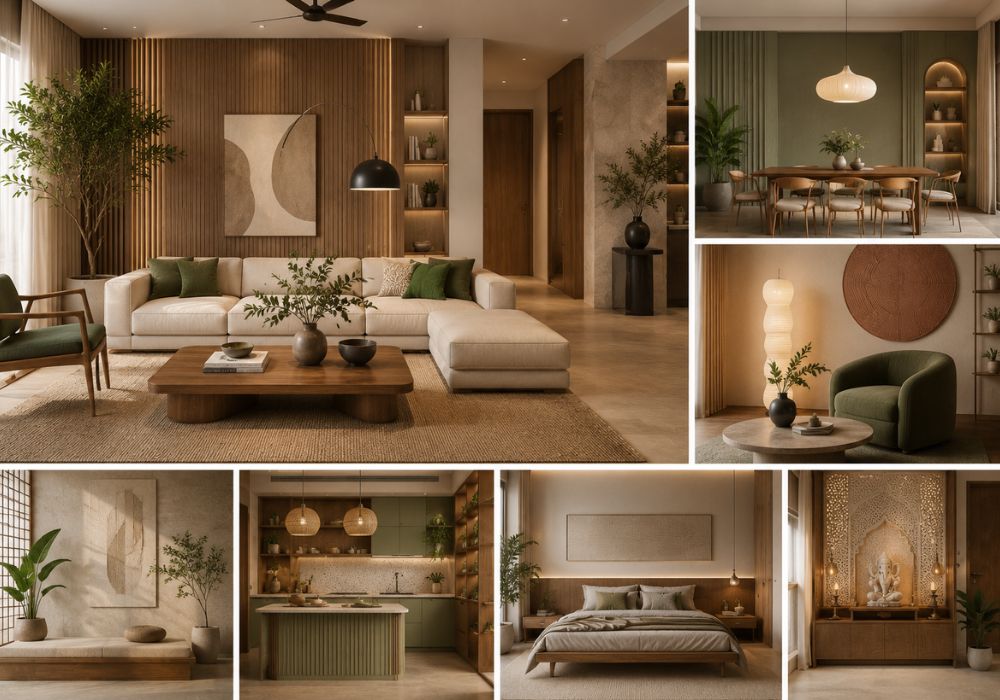
Indian homes are changing. The all-white minimalist look that dominated the early 2020s is giving way to something warmer, more personal and more considered. Homeowners across India — from Mumbai apartments to Amritsar villas — are making bolder choices, investing in better materials and designing spaces that reflect who they actually are.
Here are the seven interior design trends shaping Indian homes in 2026.
1. Warm Neutrals Are Replacing All-White Interiors
Pure white walls and white furniture had a long run. In 2026, warm neutrals are taking over — think sandy beiges, warm creams, soft taupes and earthy terracottas. These shades feel more inviting, photograph beautifully and age far more gracefully than stark white.
The shift is visible in everything from wall paint to laminate choices. Homeowners are moving toward off-white solid colour laminates, warm oak veneers and cream-toned surfaces that create a cohesive, relaxed atmosphere throughout the home.
Dcock connection: Our Solid Colour Laminate series includes a wide range of warm neutrals — from ivory and parchment to warm grey and soft blush — perfect for this aesthetic.
2. Natural Wood Textures Are Back — Bigger Than Ever
Real wood — or surfaces that convincingly replicate it — is the defining material of 2026 interiors. After years of high-gloss and lacquered finishes dominating Indian homes, the pendulum has swung back toward organic, tactile materials.
Wood grain laminates, natural veneers and textured wood-finish surfaces are being used across walls, furniture, ceilings and even floors. The look is warm, grounded and unmistakably premium.
The key difference in 2026 is that homeowners are no longer satisfied with cheap imitations. There is a growing appreciation for the depth and uniqueness of actual wood grain — which is driving demand for natural veneers and high-quality textured laminates that faithfully reproduce the feel of real wood.
Dcock connection: Our Natural Wood Veneer collection and Textured Finish Laminate range are designed precisely for this moment — authentic grain, premium feel, built for Indian conditions.
3. Japandi Style is Finding Its Place in Indian Homes
Japandi — the design philosophy that blends Japanese minimalism with Scandinavian warmth — has crossed over from global design publications into actual Indian living rooms. And it makes sense why.
The Japandi aesthetic values:
- Clean lines and uncluttered spaces
- Natural materials — wood, linen, stone
- Warm neutral colour palettes
- Functional furniture with beautiful form
- Handcrafted quality over mass-produced quantity
For Indian homes — which have always valued craftsmanship and natural materials — Japandi is less of a foreign trend and more of a familiar sensibility expressed in a contemporary language.
The key material in a Japandi interior is wood. Light oak, warm ash and natural teak surfaces define the aesthetic. Pair these with matte laminates in off-white or warm grey and you have a Japandi interior that works beautifully in any Indian home.
4. Flush Doors as a Design Statement
For decades, flush doors in Indian homes were an afterthought — a functional necessity finished in whatever paint was cheapest. In 2026, that has changed completely.
Architects and interior designers across India are treating the flush door as a design opportunity. Veneer-clad doors in teak or walnut. Laminate-finished doors in bold solid colours. Fluted or grooved door shutters. Doors with integrated handles that disappear into the surface.
The shift is being driven by two things: better materials are now more accessible, and homeowners have seen enough Instagram interiors to know that a well-designed door can transform a room.
Dcock connection: Our Premium Flush Door range is designed as a base for exactly this kind of finish — a perfectly smooth, warp-free surface ready for any laminate or veneer application.
5. Textured Wall Panels and Fluted Surfaces
Flat, painted walls are giving way to textured surfaces that add depth, shadow and visual interest. The most popular treatments in 2026 Indian interiors include:
- Fluted panels — vertical grooves that create a rhythmic, architectural feel. Seen on TV walls, headboards, wardrobe shutters and even kitchen island panels.
- Veneer-clad walls — a single wall finished in real wood veneer creates a stunning focal point in any room.
- Textured laminates — applied to walls and furniture to replicate stone, concrete or fabric textures without the cost or weight of the real material.
- Wainscoting and dado panels — a classic treatment that is seeing a major revival, often combined with warm paint colours above.
These treatments work at every budget level — from a simple textured laminate panel to a full natural veneer feature wall — and they dramatically elevate the perceived quality of any interior.
6. Biophilic Design — Bringing the Outside In
Biophilic design — designing spaces that connect people to nature — is no longer a niche concept reserved for corporate offices. In 2026 it is firmly mainstream in Indian residential interiors.
The principles are simple:
- Use natural materials — real wood, stone, linen, clay
- Maximise natural light
- Introduce plants as a design element, not an afterthought
- Use earthy, natural colour palettes
- Create visual connections to outdoor spaces wherever possible
Wood — in the form of veneers, wood-grain laminates and solid wood furniture — is the single most important material in a biophilic interior. It brings warmth, texture and an organic quality that no other material can replicate.
Research consistently shows that interiors designed with natural materials reduce stress, improve mood and increase productivity. In a post-pandemic world where Indians spend more time at home than ever before, this matters.
7. Multi-Functional Furniture for Smaller Indian Homes
Urban Indian homes are getting smaller — particularly in cities like Mumbai, Pune, Bengaluru and Delhi. The average apartment size has shrunk significantly over the past decade, and interior design has had to adapt.
The result is a growing demand for multi-functional, space-saving furniture:
- Beds with integrated storage drawers and hydraulic lifts
- Dining tables that fold or extend
- Sofas with hidden storage compartments
- Study units that double as dressing areas
- Wall-mounted desks that fold away when not in use
This kind of furniture places a premium on material quality — because every surface is used intensively every single day. Plywood quality matters enormously here. A hydraulic bed mechanism puts significant stress on the box structure — you need good quality, calibrated plywood that won’t bow or delaminate under repeated use.
Dcock connection: Dcock Premium Pro plywood — calibrated, hardwood core and anti-bacterial — is the material of choice for premium modular furniture manufacturers across North India for exactly this reason.
Bringing It All Together
The common thread running through all seven trends is a move toward quality, authenticity and longevity. Indian homeowners in 2026 are making more considered choices — investing in better materials that last longer, look better over time and reflect a more mature, confident sense of personal style.
Whether you are building a new home, renovating an existing one or simply refreshing a few rooms — the materials you choose will define how your interior ages. Choose well.
Explore the Dcock range of plywood, laminates, veneers and flush doors — or request our catalogue to see the full collection.
Frequently Asked Questions
Which interior style is most popular in India in 2026?
Warm minimalism and Japandi-inspired interiors are the dominant aesthetic — characterised by natural wood surfaces, warm neutral colours and clutter-free spaces.
Are veneers better than laminates for a premium look?
Veneers offer a depth and warmth that laminates cannot fully replicate. For luxury interiors and statement pieces, veneers are the preferred choice. For kitchens and high-traffic areas, quality laminates are more practical.
What is the best plywood for modular furniture in India?
ISI certified, calibrated plywood with a hardwood core — such as Dcock Premium Pro — is recommended for modular furniture applications where dimensional accuracy and structural strength are critical.